A Woodland Cottage Garden

Cottage Garden Project
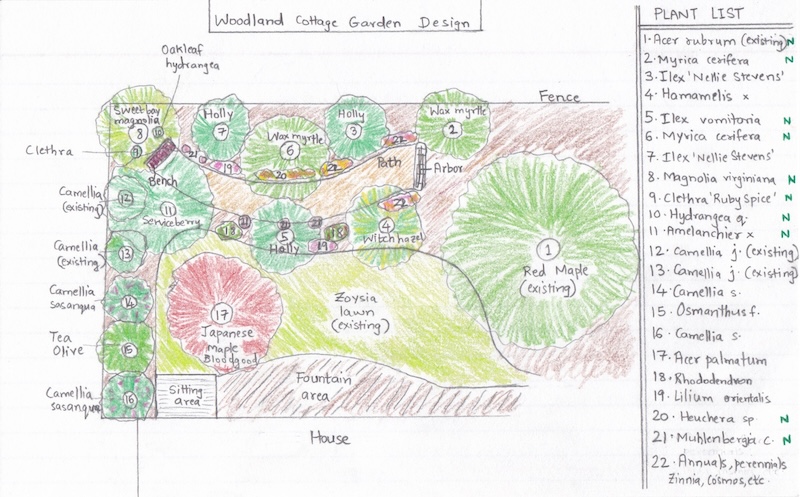
In the corner of this backyard, a trove of 20+ year old Leyland Cypress trees was taken down because they were nearing the end of their lives and had started dying with diseases. This made it the perfect site to create a cute cottage garden tucked away in isolation - surrounded by oak, sweetgum, and maple trees. Since the available project area was only about 700 square feet, we drew inspiration from the Miyawaki method of creating a dense planting in a compact space.
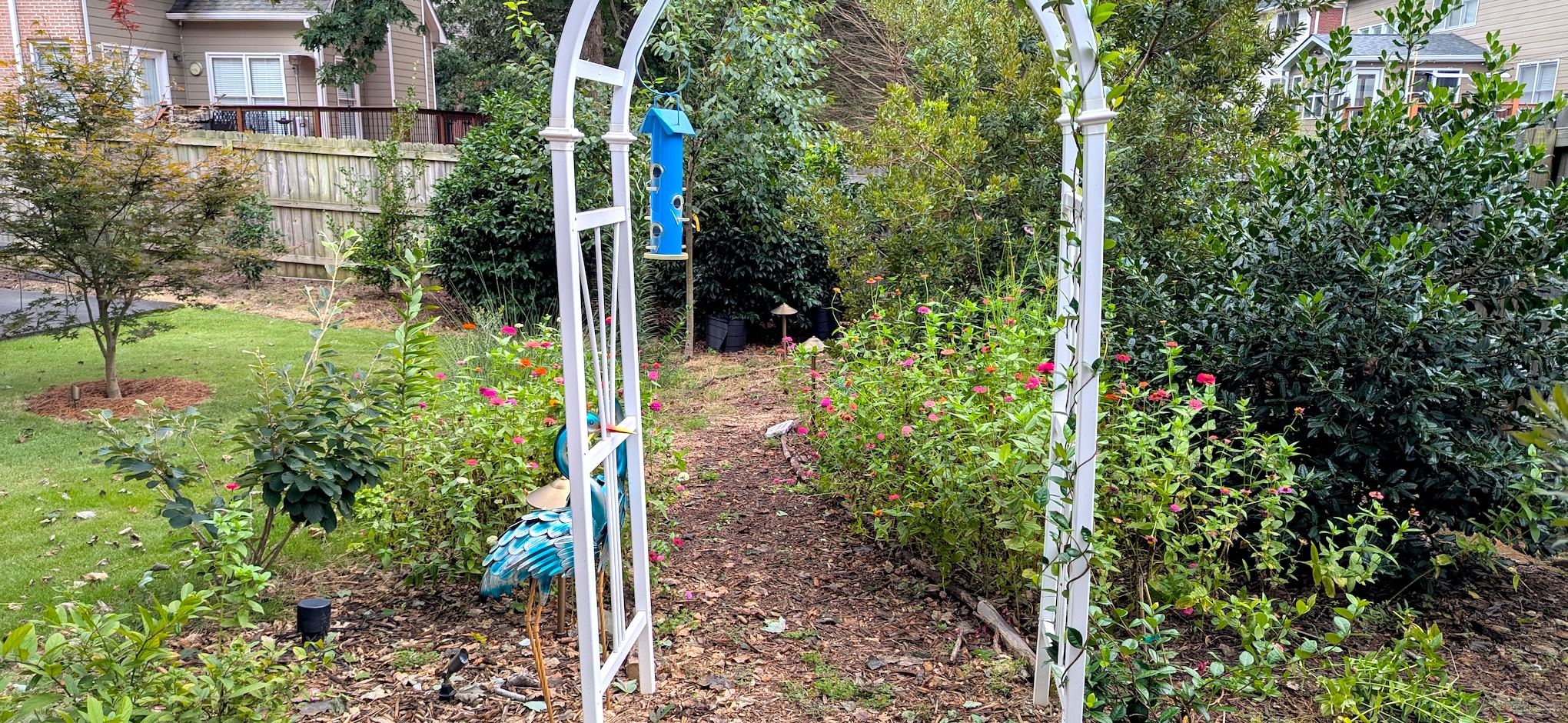
We chose a few understory trees to act as the canopy; with a selection of shrubs, grasses, perennials, annuals, and groundcovers as the broad understory. An arbor would mark the entry point of the cottage garden, with a curved path flanked by plants leading to a shaded bench in the corner. The curve would ensure the entrance and the end were not visibly connected - to encourage the visitor to walk through the path.
Plant Selection
The felled Leyland Cypress trees left behind a soil rich in nutrients due to the continued decomposition of their roots underground, and because that area was kept constantly mulched. We noticed large areas of the soil remaining moist for longer periods - which made it a great option to plant moisture loving species: sweetbay magnolia (Magnolia virginiana) to anchor the fence corner; with shade-tolerant cultivars of summersweet (Clethra alnifolia) and oakleaf hydrangea (Hydrangea quercifolia) underneath it.
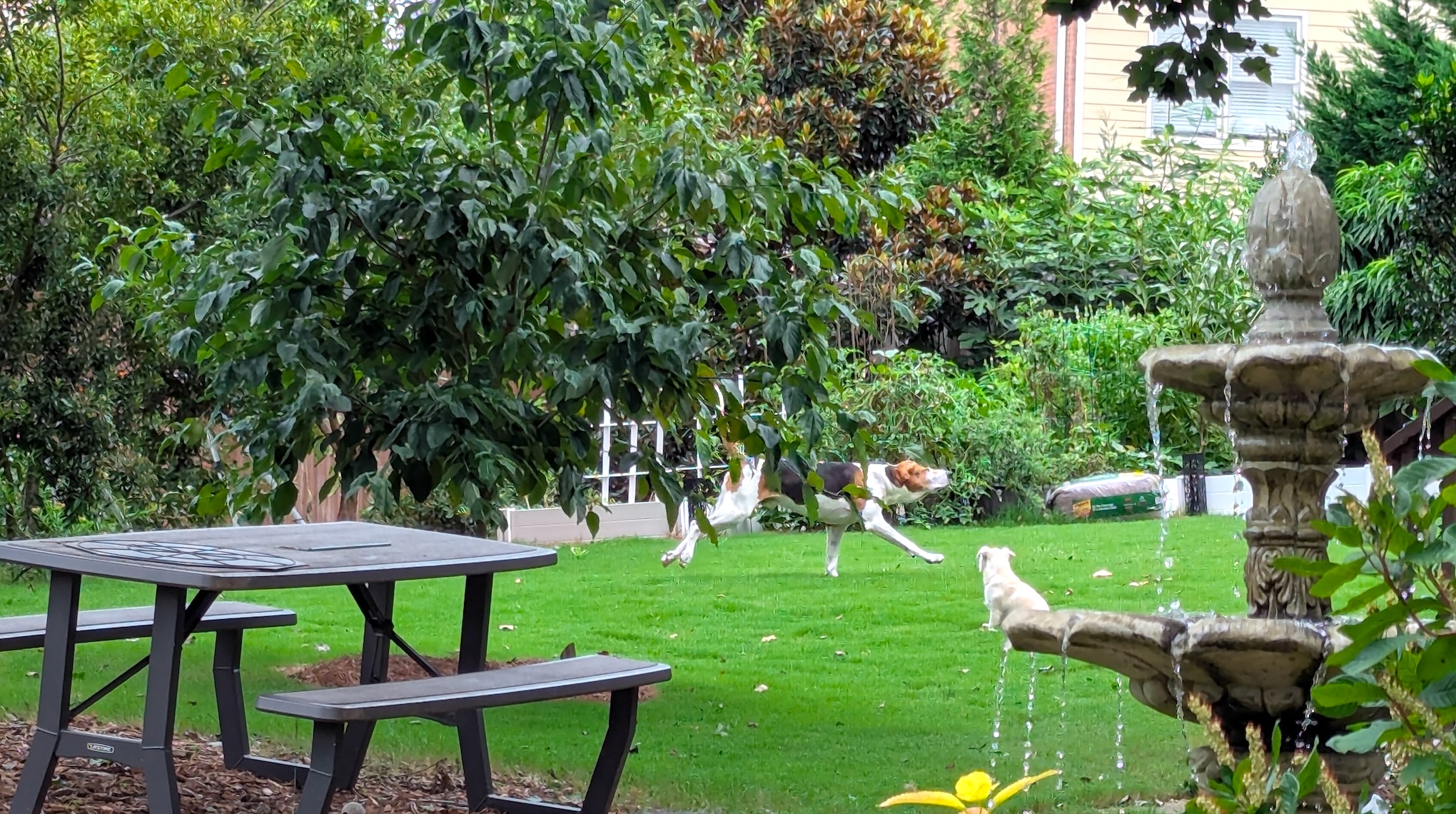
A wax myrtle (Myrica cerifera) - arguably an underused and underappreciated native landscape plant - is used centrally along the bend in the path. The benefits of using a wax myrtle are numerous: it is an evergreen that grows fast without any fuss, its leaves smell pleasant, it produces berries that birds love, and best of all - it fixes nitrogen in the soil - making the plants around it prosper more. It is also salt tolerant - which means if you have dogs that frequently like to mark their territory, it can withstand the salts in their urine more than other plants.
Three evergreen hollies (Ilex 'Nellie Stevens' and Ilex vomitoria) were interspersed with the deciduous serviceberry (Amelanchier x grandiflora 'Autumn Brilliance') and a witch hazel (Hamamelis x intermedia 'Arnold Promise'). The understory comprises of a mixture of
Woody shrubs:
- Azaleas
- Virginia sweetspire
- St. John's wort
- Camellias
Grasses:
- Muhly grass
Vines:
- Night-blooming jasmine
Perennials:
- Heucheras
- Lilies
Annuals:
- Zinnias
- Cosmos
- Wildflowers
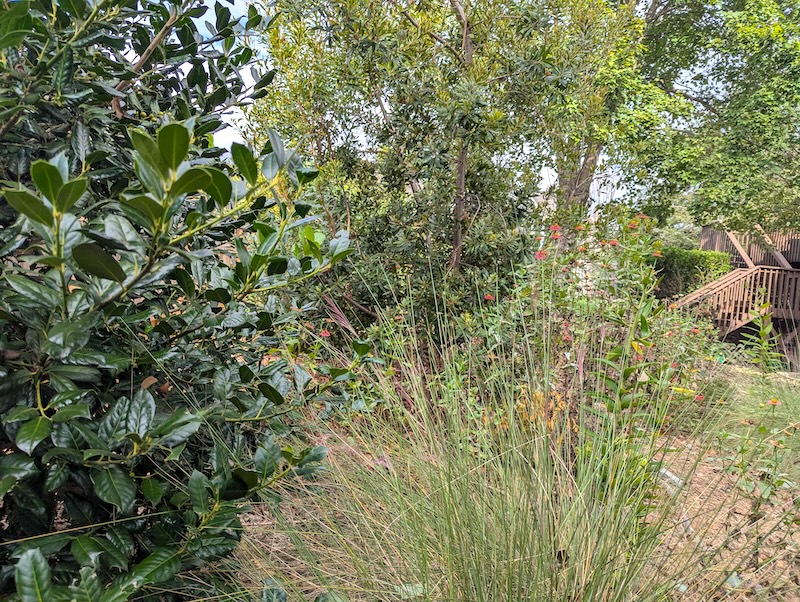
All the plants chosen along the fence are fast-growing evergreens - thus maximizing their utility in providing privacy as hedges.
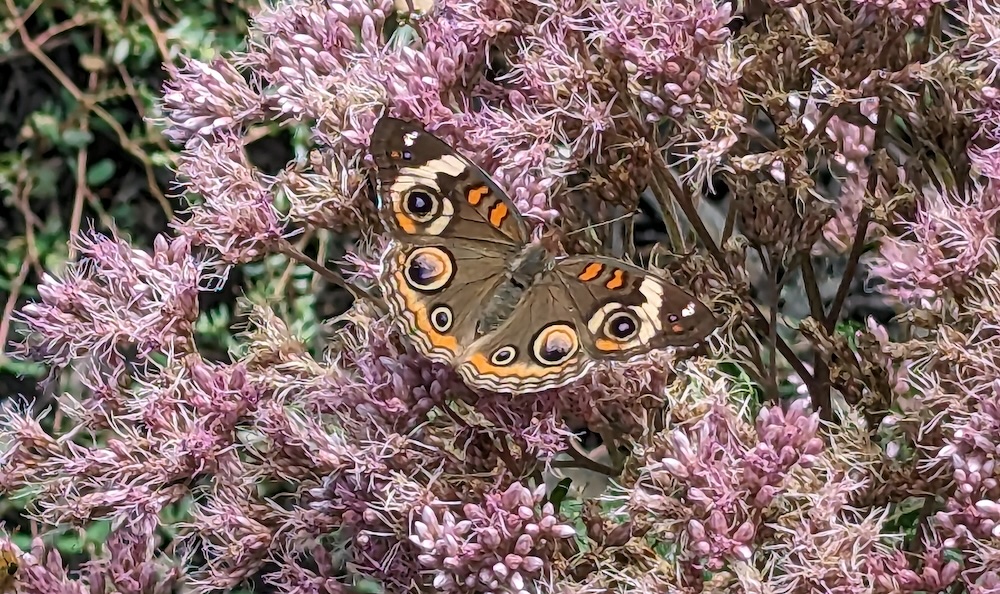
At least half the species chosen were natives; the rest were selected because they offered a high wildlife value: year round blooms (zinnias, camellias, lilies, jasmine, evergreen azaleas) to attract pollinators and butterflies, and winter berries to provide a food source for the birds when there's not much to go around. All the deciduous species turn vivid shades of red, orange, and yellow in the fall.
Needless to say, no invasive plants were chosen.
Regenerative Design Principles
In keeping with regenerative design principles, we chose materials and plants which are easy to maintain.
Natural hardwood mulch was chosen for the path, which allows for leaves to settle and resemble the forest floor. Unlike pavers or gravel, no maintenance is required - leaves need not be blown or raked - and the fallen leaves naturally decompose to enrich the soil. They also provide habitat for insects and mammals to overwinter in.
Apart from leaf litter which turns into compost and feeds the soil, we only apply organic slow-release fertilizers in the spring until the plants are established. These help build the mycelium network and establish mycorrhizae within the soil faster. To control pests, we rely on beneficial insects and reptiles (lizards, frogs) that keep pest populations in check.
Logs from branches that were cut were repurposed as markers to delineate the border of the path. These will last a few years, but they are readily available and are renewable.
We rotate a diverse mix of annuals in unoccupied areas - this keeps the soil aerated, prevents compaction, feeds soil microbes, and adds organic matter at the end of the season.
We hope this project inspires you to implement the same in your yard and use some of these concepts in your own designs. As always, please reach out to us if you need help with it!